Top Motor With Encoder Solutions for Global Buyers?
In the rapidly evolving field of automation, "Motor With Encoder" solutions have gained significant traction among global buyers. John Smith, a leading expert in motion control systems, once remarked, "The integration of encoders with motors enhances precision and efficiency." This statement highlights the crucial role that encoders play in optimizing motor performance.
Motor with Encoder systems are indispensable in applications requiring accurate feedback on position and speed. Industries such as robotics, manufacturing, and automotive heavily rely on these solutions for enhanced performance. However, navigating the plethora of options in this market can be daunting for buyers. Many products promise high precision, yet differences in technology and implementation can lead to varied results. Careful evaluation is necessary to choose the right solution.
Buyers must consider factors such as responsiveness, durability, and compatibility with their existing systems. In a landscape filled with potential pitfalls, ensuring quality and reliability in Motor with Encoder solutions is paramount. In demanding applications, even minor inaccuracies can lead to significant operational challenges. Thus, understanding the market and differentiating between options is essential for making informed decisions.
Understanding Motor with Encoder Technology
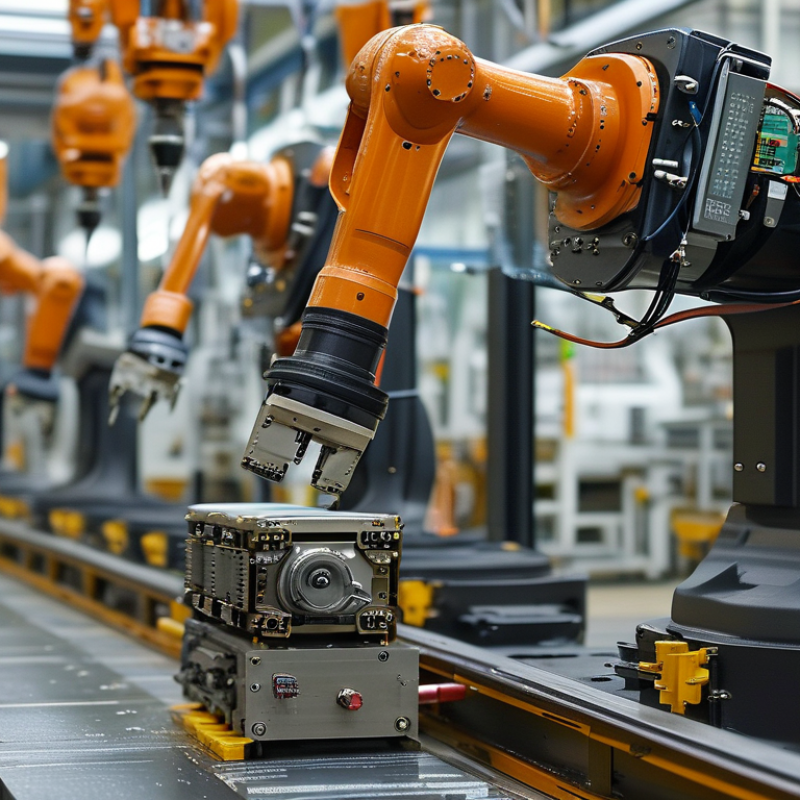
Motor with encoder technology plays a crucial role in modern automation. It enhances precision in control systems. An encoder provides feedback by tracking the motor's position and speed. This allows for real-time adjustments in various applications. Industrial robots, CNC machines, and conveyor systems often utilize this technology. The integration of encoders with motors increases efficiency and accuracy.
Understanding the types of encoders is essential. There are optical, magnetic, and capacitive encoders. Each type has its advantages and limitations. For example, optical encoders offer high accuracy but may be sensitive to dust and vibrations. Meanwhile, magnetic encoders tend to be more robust but may provide lower resolution. It’s important to evaluate your needs carefully. Sometimes, the motor might not respond as expected. This could be due to calibration issues or incorrect encoder selection.
In the ever-evolving landscape of technology, the importance of reliability cannot be overstated. Users must ensure the encoder they select fits the motor application. Thorough testing is crucial to prevent costly failures in the field. Engineers often need to iterate their designs multiple times. Feedback from real-world applications helps refine the integration process. The learning curve can be steep, but the results are often worth the effort.
FAQS
: Motors with encoders provide precise feedback for better automation and control in various industries.
They enable accurate movement and positioning, which is crucial for high-precision tasks in robotics.
Encoders monitor motor speed and position, improving quality assurance during production processes.
High overhead costs and compatibility issues with existing systems can deter investment in advanced solutions.
Proper training for operators is essential to fully utilize the benefits of advanced motor technology.
Rising demand for automation and IoT integration is expected to fuel significant market growth in upcoming years.
Yes, energy-efficient motors are gaining popularity due to environmental concerns, balancing performance and impact is key.
Manufacturers aim to improve efficiency and accuracy while integrating new technologies like IoT.
Companies with outdated designs may struggle to compete in a rapidly evolving market, hindering their success.
Addressing technical challenges and committing to sustainability are crucial for long-term competitiveness.
Conclusion
The article "Top Motor With Encoder Solutions for Global Buyers" delves into the intricate technology behind Motor With Encoder systems. These advanced units enhance performance by precisely controlling motor functions and providing accurate feedback, which is essential for automation in industries such as manufacturing, robotics, and automotive. The article highlights key applications of these systems across various sectors, emphasizing their importance in ensuring efficiency and precision.
Furthermore, it outlines the critical features to consider when selecting Motor With Encoder combinations, including resolution, torque, and compatibility with existing systems. Additionally, it discusses the leading manufacturers in the market, providing insights into the competitive landscape. Lastly, factors influencing the choice of Motor With Encoder systems are analyzed, aiding buyers in making informed decisions that align with their operational needs.
