10 Tips to Choose an Energy Efficient Motor
Choosing the right Energy Efficient Motor is a practical decision, not a simple catalog search. Motor efficiency affects electricity use, operating temperature, maintenance costs, and equipment life. A motor may appear efficient on its nameplate, yet perform poorly when oversized or lightly loaded. That detail is easy to miss. This guide presents 10 practical tips for comparing motor ratings, load patterns, controls, installation conditions, and lifetime value. It also considers standards, manufacturer documentation, and real operating measurements. A workshop fan, conveyor, or pump each creates different demands. The best choice depends on how the motor actually works every day.
Look beyond the highest efficiency percentage. Check IE classifications, rated output, starting current, speed, torque, and expected duty cycle. Variable-speed applications may need compatibility with a drive and suitable insulation. Dust, heat, moisture, and frequent starts can change the selection completely. Experienced technicians usually review the application before approving a purchase. They may compare measured current with the manufacturer’s performance curve. Small errors matter. An oversized motor can waste energy for years, while an undersized unit may overheat under peak loads. No checklist is flawless. Supplier claims should be verified through recognized test standards and clear technical data. Installation quality matters too, including alignment, ventilation, cable sizing, and preventive maintenance. These ten tips are designed to support careful decisions, but site conditions should always be reviewed by a qualified professional.
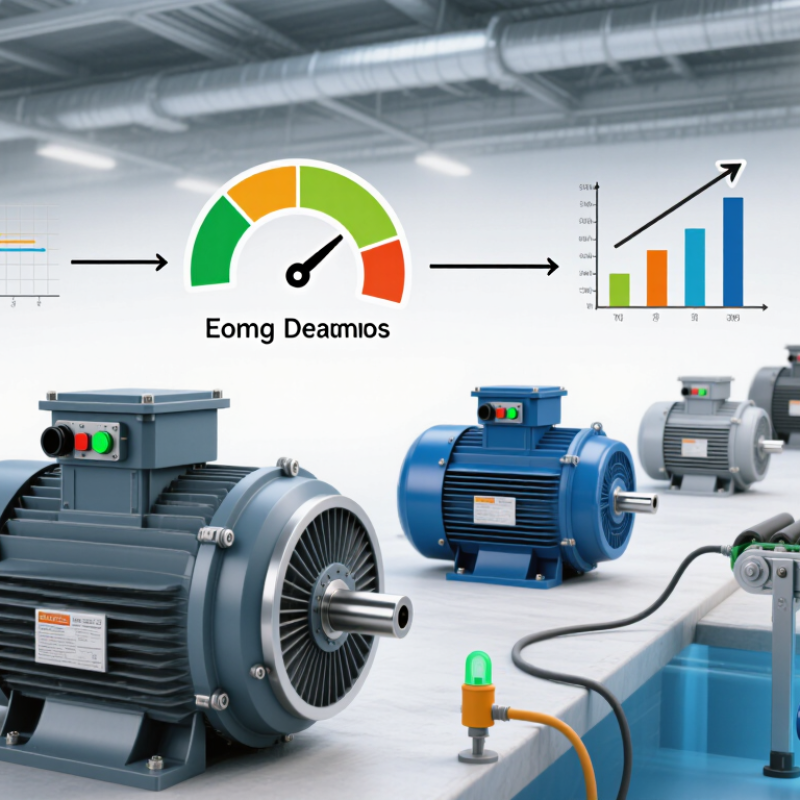
Define IE1–IE5 Efficiency Classes Under IEC 60034-30-1
IEC 60034-30-1 defines efficiency classes for line-operated AC motors. IE1 means standard efficiency, while IE2 indicates high efficiency. IE3 is premium, and IE4 is super-premium efficiency. IE5 represents an ultra-premium target, but users must verify the applicable standard edition. The 2014 edition formally covered IE1 through IE4; IE5 requirements may depend on newer revisions and local regulations.
These classes compare motor losses at defined operating points. They do not measure the complete efficiency of a pump, fan, gearbox, or variable-speed drive. The International Energy Agency has reported that motor-driven systems consume roughly half of global electricity. In the United States, the Department of Energy estimates motor systems use more than 70% of industrial electricity. Small efficiency gaps can therefore become large operating costs.
Use ten practical checks. Review duty cycle, rated load, speed, starts per hour, ambient temperature, enclosure, cooling, bearing conditions, drive compatibility, and lifecycle cost. A motor running at 40% load may not deliver the expected savings. Oversizing remains common, and it is often overlooked during purchasing. Compare test data under IEC conditions, then inspect real load profiles. IE4 or IE5 is not automatically better when installation, control, or maintenance is poorly matched.
| IE Class | Efficiency Classification | What It Indicates | Energy and Application Considerations |
|---|---|---|---|
| IE1 | Standard Efficiency | Baseline efficiency level for comparison. | Usually less attractive for new installations with long operating hours because electrical losses are higher than in newer efficiency classes. |
| IE2 | High Efficiency | Improved efficiency compared with IE1. | May be suitable where operating hours are limited or where applicable energy regulations permit its use. Always check local requirements. |
| IE3 | Premium Efficiency | Lower losses and higher efficiency than IE2 at comparable rated conditions. | A common choice for continuously operated industrial equipment, especially pumps, fans, compressors, and conveyors. |
| IE4 | Super Premium Efficiency | Lower total losses than IE3 when tested under the same applicable conditions. | Can reduce lifetime electricity consumption, particularly in high-load and high-runtime applications. Purchase cost and drive compatibility should be evaluated. |
| IE5 | Highest Efficiency Class in the Current IEC Classification Framework | Designed to represent a further reduction in losses beyond IE4 where the motor design and applicable standard scope support it. | Availability, rated-power coverage, motor technology, and regulatory recognition can vary. Confirm the applicable edition of IEC 60034-30-1 and the manufacturer’s test documentation. |
| No. | Selection Tip | Key Data to Check | Why It Matters |
|---|---|---|---|
| 1 | Identify the required mechanical output. | Rated shaft power, torque, speed, duty cycle, and starting requirements. | Selecting a motor that is too large can increase purchase cost and may cause inefficient operation at light load. |
| 2 | Choose the highest practical IE class. | IE rating shown on the motor nameplate and technical datasheet. | Higher efficiency generally means lower electrical losses at comparable rated operating conditions. |
| 3 | Compare efficiency at the actual operating load. | Efficiency at 25%, 50%, 75%, and 100% load where available. | Motor efficiency varies with load; rated-load efficiency alone may not represent the real installation. |
| 4 | Calculate annual operating hours. | Hours per day, operating days per year, load profile, and electricity tariff. | Energy savings become more valuable as runtime and electricity cost increase. |
| 5 | Match the motor to the power supply. | Voltage, frequency, phase configuration, rated current, and starting method. | Incorrect electrical conditions can increase losses, reduce performance, or cause premature failure. |
| 6 | Check variable-speed-drive compatibility. | Drive frequency range, insulation system, bearing-current protection, cooling, and motor thermal limits. | A high-efficiency motor must remain thermally and electrically suitable across the intended speed range. |
| 7 | Evaluate the complete motor system. | Motor, drive, pump, fan, compressor, gearbox, coupling, and control strategy. | System efficiency can be affected more by throttling, oversized equipment, friction, or poor control than by motor losses alone. |
| 8 | Review installation and environmental conditions. | Ambient temperature, altitude, enclosure rating, cooling method, humidity, dust, and hazardous-area requirements. | Derating or inadequate cooling can reduce efficiency, reliability, and service life. |
| 9 | Use verified test and compliance information. | Applicable IEC 60034-30-1 class, test method, rated conditions, tolerances, and technical documentation. | Efficiency values are meaningful only when the test conditions and standard scope are clearly stated. |
| 10 | Compare total cost of ownership. | Purchase price, installation, energy consumption, maintenance, downtime, replacement cost, and expected service life. | The most economical motor is determined by lifetime cost, not purchase price alone. |
| Calculation | Formula | Practical Use |
|---|---|---|
| Electrical input power | Input power = Mechanical output power ÷ Motor efficiency | Estimates the electrical power required to deliver a specified shaft output. |
| Motor losses | Losses = Electrical input power − Mechanical output power | Shows how much input energy is converted into heat rather than useful mechanical output. |
| Annual energy consumption | Annual energy = Input power × Operating hours per year | Provides the basis for comparing energy use between motor options. |
| Simple payback period | Payback period = Additional purchase cost ÷ Annual energy-cost savings | Indicates how long it may take for the efficiency upgrade to recover its additional cost. |
FAQS
They describe motor efficiency classes under IEC 60034-30-1. IE1 is standard efficiency, while IE3 and IE4 offer higher efficiency. IE5 is an ultra-premium target. Check the current standard edition and local requirements.
No. They mainly compare motor losses at defined operating points. They do not fully measure pumps, fans, gearboxes, or drives. System efficiency can still disappoint.
An oversized motor may run lightly loaded, reducing efficiency and power factor. A small motor may overheat during peak demand. Measure real load conditions before choosing a size.
Record running hours, idle periods, starts per hour, load changes, and ambient temperature. An eight-hour motor differs from one cycling every thirty seconds. Duty cycle matters.
Check starting, acceleration, and continuous torque separately. A conveyor carrying wet material may need strong starting torque. Average load data can hide brief peaks.
No. The margin depends on duty cycle, temperature, altitude, and maintenance. A fixed rule may create unnecessary oversizing. Recheck the assumption.
Lowering pump speed can greatly reduce power under affinity-law conditions. A 20 percent speed reduction may reduce pump power by nearly 50 percent. Actual savings depend on the system.
Check motor compatibility, minimum speed, cooling, harmonics, bypass needs, and safe pump operation. Also measure flow, pressure, and seasonal demand. A drive cannot repair a blocked filter.
Use temporary meters and compare kilowatt-hours per unit of water moved. Measure current and temperature after installation. The spreadsheet may be wrong. That is useful evidence.
Conclusion
Choosing an Energy Efficient Motor requires more than selecting the highest efficiency label. Start by understanding the IE1–IE5 efficiency classes defined under IEC 60034-30-1, then compare motor performance at 75%, 100%, and partial loads, since many systems operate below their rated capacity. Proper sizing should consider duty cycle, starting and running torque, load factor, and expected operating conditions to avoid both oversizing and unnecessary energy consumption.
For pumps and other variable-load applications, a correctly matched variable-speed drive can reduce energy use by approximately 20–50% by adjusting motor speed to actual demand. Finally, evaluate lifecycle cost rather than purchase price alone. Because electricity can represent about 90% of total ownership cost, a motor with a higher initial investment may provide significant long-term savings through lower power consumption, reduced operating expenses, and improved system efficiency.
