7 Tips for Choosing the Right Programmable Gear Motor

Time:2026-09-10 Author:Oliver
0%

Choosing the right Programmable Gear Motor can determine whether a machine runs smoothly or struggles under real operating conditions. A motor may appear powerful on a workbench, yet stall when a conveyor carries uneven loads. Small details matter, including starting torque, output speed, duty cycle, voltage, gearbox ratio, and controller compatibility. This guide presents seven practical tips for making that decision with greater confidence.

Reliable selection begins with the application, not the product catalog. Measure the load, movement distance, required acceleration, and available installation space. Check the manufacturer’s torque curves instead of relying only on maximum ratings. A gear motor rated for continuous operation may behave differently during repeated starts and stops. Watch the temperature, too. Heat can shorten service life when the motor operates inside a tight enclosure.

The best choice also considers feedback, programming flexibility, noise, maintenance, and supplier support. Clear wiring diagrams and tested software libraries can prevent expensive delays. I have seen projects focus heavily on speed while overlooking backlash or connector quality. That mistake is easy to repeat. It deserves reflection. Prototype the motor under realistic loads, record current and temperature, and compare results with the datasheet. No selection method is perfect. However, careful testing and honest review can expose weak assumptions before they become equipment failures. These seven tips offer a practical framework for evaluating performance, reliability, integration, and long-term value.
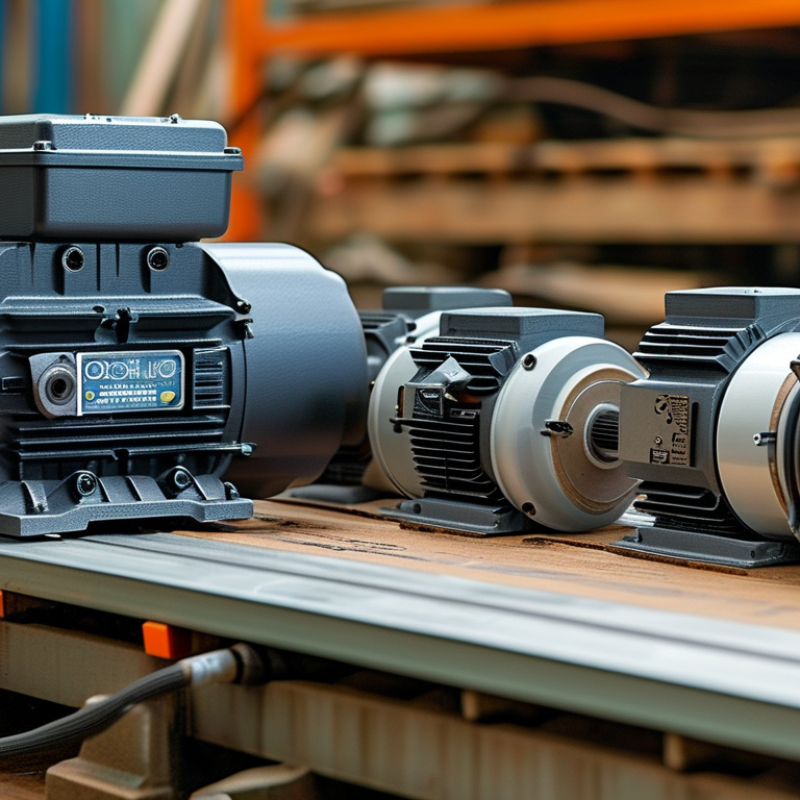
7 Tips for Choosing the Right Programmable Gear Motor

Define the Motion Requirements and Operating Conditions

Choosing a programmable gear motor starts with the motion, not the catalog. Define speed, torque, acceleration, travel, and stopping accuracy. Include load inertia and reflected inertia. A conveyor moving 40 kilograms behaves differently during startup than during steady operation. The U.S. Department of Energy’s Motor Systems Tip Sheet estimates that motor systems consume about 70% of industrial electricity. Efficiency belongs in the specification.

Tip: Map the operating cycle. Record peak torque, average torque, starts per hour, idle time, and reversing frequency. Check the real duty cycle. IEC 60034-1 classifications help describe motor operation, but they do not predict every gearbox temperature rise. Measure the housing after repeated cycles. An enclosure at 35°C can expose a weak thermal assumption. I have seen acceptable calculations fail here.

Tip: Test the worst case, not the showroom case. Confirm supply voltage, controller limits, backlash, shaft loads, mounting direction, dust, moisture, and noise. Use the required reduction ratio, then verify acceleration with the actual payload. Published ratings often assume specific cooling and duty conditions. That assumption may fail. The IEA’s Electricity 2024 report places industry near 40% of global electricity demand, making avoidable motor losses significant. A neat spreadsheet can still hide a poor operating profile.

Prototype before purchase. Log current, temperature, speed, and stopping error during the hardest cycle. Compare those readings with the data sheet. Revise the requirement sheet when reality disagrees. That is not wasted time.

Match Motor Torque, Speed, and Gear Ratio to the Application

7 Tips for Choosing the Right Programmable Gear Motor

Match motor torque, speed, and gear ratio to the application before comparing specifications. Measure the actual load, including friction, incline, and acceleration. Measure under load. A motor that turns an empty mechanism may stall when carrying products. Calculate required torque, then add a practical safety margin for starting resistance and unexpected variation. Avoid excessive margins, though, because oversized motors can increase cost and reduce control sensitivity.

Choose the target output speed from the machine’s working cycle, not from the motor’s maximum rating. A higher gear ratio increases torque but reduces speed. It can also increase backlash and response time. Check whether the application needs smooth positioning, quick reversals, or steady rotation. Select a programmable controller that supports the required speed and torque commands. Confirm voltage, current limits, duty cycle, and thermal conditions. Heat matters. A motor running near its limit may perform well briefly, then lose torque after repeated cycles.

Review the gear train’s efficiency and allowable radial or axial load. These details are easy to overlook. I have seen designs pass bench testing but struggle after dust, misalignment, and continuous operation were introduced. Specify feedback when accurate positioning matters, and test the complete assembly with its real payload. Do not guess. Record acceleration time, operating temperature, noise, and stopping error during trials. Some early calculations will be wrong, and that is useful if testing exposes them before production.

7 Tips for Choosing the Right Programmable Gear Motor

Match motor torque, speed, and gear ratio to the application

The chart compares representative output requirements for common applications. Select a gear motor by checking continuous torque, operating speed, and the approximate reduction ratio together. Allow additional torque capacity for startup loads, acceleration, friction, and service-factor requirements.

Evaluate Control, Programming, and Feedback Options

7 Tips for Choosing the Right Programmable Gear Motor

Evaluate Control, Programming, and Feedback Options

Choosing a programmable gear motor starts with the control method. Determine whether your system needs digital commands, analog signals, or network communication. Match the motor’s programming interface with your existing controller. A perfect motor can still fail when integration becomes complicated.

Ask how motion profiles are created and stored. Some systems support acceleration, speed, position, and torque settings. Confirm whether users can update these parameters without special software. Check the available safety limits, including overload protection and emergency stopping. Look for clear documentation, wiring diagrams, and example code. These details often reveal more than a polished product description.

Feedback deserves careful attention. An encoder can report position, but resolution and response speed affect real accuracy. Compare open-loop control with closed-loop correction under changing loads. Test the motor with the actual gearbox, payload, and duty cycle. Record missed positions, heat buildup, and recovery behavior. Do not trust simulations alone. I once underestimated backlash during a small indexing test, and the error became obvious under continuous operation. Review the supplier’s test data, yet verify critical claims independently. A short bench test may expose limitations that specifications hide.

7 Tips for Choosing the Right Programmable Gear Motor - Evaluate Control, Programming, and Feedback Options

Tip Selection Dimension What to Evaluate Common Options or Data Points Practical Guidance
1 Define the Required Motion Determine output speed, continuous torque, peak torque, acceleration, travel distance, and operating cycle. Speed: rpm; torque: N·m; power: W; duty cycle: continuous or intermittent; direction: single or reversible. Select the motor using the load at the gearbox output, not only the motor's no-load speed. Include an engineering margin for starting loads and friction.
2 Match the Gear Ratio Compare the required output speed and torque with the available reduction ratio, efficiency, backlash, and gearbox type. Typical small gear-motor ratios: approximately 4:1 to 1,000:1; common types include spur, planetary, worm, and helical gearing. Higher ratios generally reduce speed and increase output torque. Check efficiency and thermal limits, especially for worm gears and continuous operation.
3 Choose the Control Interface Verify how the controller will command speed, position, direction, enable, braking, and fault reset functions. PWM; analog voltage such as 0–5 V or 0–10 V; pulse-and-direction; UART; RS-485; CAN-based communication. Use PWM or analog control for simple speed commands. Use pulse-and-direction or a digital network when repeatable positioning and coordinated motion are required.
4 Check Programming Capability Assess whether motion profiles, acceleration ramps, limits, current limits, homing, and fault responses can be configured. Parameter-based setup; onboard motion profiles; scripting or command-line configuration; external PLC or microcontroller control. A programmable drive should provide adjustable acceleration and deceleration, current protection, direction control, and clearly documented command parameters.
5 Select the Feedback Method Decide whether the application needs speed verification, position correction, stall detection, or closed-loop torque control. Hall sensors; incremental quadrature encoder; magnetic encoder; optical encoder; sensorless back-EMF estimation. Hall feedback is suitable for basic commutation and speed sensing. Encoders provide position feedback; resolution should be specified in counts per revolution or pulses per revolution.
6 Verify Electrical and Thermal Limits Check supply voltage, continuous and peak current, startup current, temperature rise, cooling, and protection features. Common DC supply classes: 12 V, 24 V, and 48 V; protections may include overcurrent, overvoltage, undervoltage, overtemperature, and stall protection. The power supply and motor driver must support peak current during acceleration. Do not size the supply only from the motor's nominal running current.
7 Evaluate Integration and Reliability Review mounting dimensions, shaft loading, connector type, environmental rating, noise, service life, diagnostics, and documentation. Ingress protection such as IP ratings; radial and axial load limits; rated operating temperature; encoder cable requirements; status and fault feedback. Confirm the gearbox can withstand the actual shaft loads and that the feedback wiring is shielded or routed correctly where electrical noise is present. Require complete drawings, parameter lists, and test procedures.
Key selection rule: A programmable gear motor should be evaluated as a complete motion system—including the motor, gearbox, driver, feedback device, power supply, and control interface—rather than by rated speed or torque alone.

Check Mechanical Compatibility, Power Supply, and Installation Needs

Choosing a programmable gear motor starts with mechanical compatibility, not software features. Measure shaft diameter, mounting-hole spacing, gearbox orientation, and available clearance. A motor that fits the drawing can still fail under real load. Check rated torque, peak torque, speed range, duty cycle, backlash, and load inertia.

In commissioning work, I have seen small alignment errors create heat, vibration, and premature bearing wear. ISO 6336 provides recognized methods for evaluating cylindrical gear strength, but actual mounting conditions still matter.

Power supply details deserve equal attention. Confirm voltage, continuous current, startup current, controller limits, and braking requirements.

The U.S. Department of Energy’s 2021 Motor Systems Market Assessment reports that motor-driven equipment uses about 68% of industrial electricity in the United States. Small efficiency losses can become expensive at scale.

The IEA’s Electricity 2024 report also projected global electricity demand growth of about 4% in 2024 and 2025. Do not size the power supply only from the motor’s label. It may be insufficient.

Installation needs are often underestimated. Provide ventilation, protect connectors from oil and moisture, and route signal cables away from switching noise.

Confirm grounding and emergency-stop behavior before testing motion. IEC 60034-1 offers useful motor performance and rating guidance.

A practical test should include cold starts, repeated reversals, maximum load, and several hours of operation. My own first calculations are sometimes too optimistic. Leave thermal and torque margin, even when the spreadsheet looks perfect.

Compare Durability, Maintenance, Cost, and Supplier Support

7 Tips for Choosing the Right Programmable Gear Motor

Durability should match the real workload, not just the catalog rating. Check continuous torque, peak torque, duty cycle, and operating temperature. Ask for test data from repeated start-stop cycles. A motor that survives one bench test may struggle after months of frequent reversals. Inspect housing protection, gear material, shaft tolerance, and resistance to vibration. Small details matter. Confirm whether replacement gears and seals remain available.

Maintenance affects production time and long-term cost. Choose a design with accessible connectors, clear error codes, and simple parameter backup. Ask how often lubrication is required and whether the gearbox uses sealed bearings. I once selected a low-cost unit with impressive specifications. Its service access was poor, and troubleshooting took far too long. That mistake changed my evaluation checklist. Estimate labor, downtime, spare parts, energy use, and programming tools before comparing prices. The cheapest purchase can become expensive quickly.

Supplier support deserves the same attention as motor performance. Request response-time targets, configuration guidance, wiring documents, and realistic warranty terms. Ask whether technical staff can review your load profile before purchase. A reliable supplier should explain limitations, not only highlight benefits. Check firmware update procedures and compatibility with your controller. Keep written records of every specification. Support quality is difficult to measure before installation, but unanswered technical questions are an early warning. Test a sample under your actual load when possible. Data is useful, but field evidence is better.

FAQS

: How should I calculate the required motor torque?

: Measure the real load, including friction, incline, and acceleration. Test the mechanism under load. Add a practical safety margin for starting resistance. Avoid excessive margins, because oversized motors cost more and reduce control sensitivity.

Why should output speed come from the machine cycle?

The working cycle defines useful speed. A motor’s maximum rating may not suit the application. Faster gearing can reduce torque and increase backlash. Check whether the machine needs positioning, reversals, or steady rotation.

What does a higher gear ratio change?

A higher ratio usually increases output torque and reduces speed. It may also increase backlash and response time. These effects can matter during indexing or quick direction changes.

Which electrical details need checking?

Confirm voltage, current limits, duty cycle, and thermal conditions. The controller must support the required speed and torque commands. A mismatch can cause poor performance or difficult integration.

Why is motor temperature important?

Heat can reduce torque after repeated cycles. A motor may work briefly near its limit, then weaken during continuous operation. Record operating temperature during realistic trials.

What control and programming features should I review?

Identify the required signal type, such as digital, analog, or network communication. Check how motion profiles are created and stored. Look for adjustable acceleration, speed, position, and torque settings. Clear wiring diagrams and example code can prevent integration problems.

When is feedback such as an encoder useful?

Feedback helps when accurate positioning matters. Compare resolution and response speed, not only the presence of an encoder. Test closed-loop correction under changing loads. Open-loop control may appear adequate until the payload changes.

How should I test the complete assembly?

Test with the actual gearbox, payload, and duty cycle. Record acceleration time, noise, heat buildup, stopping error, and missed positions. Do not trust simulations alone. Bench testing may hide backlash, dust, or misalignment. Early calculations can be wrong, and testing should expose that.

Conclusion

Choosing the right Programmable Gear Motor begins with clearly defining the required motion, including speed, direction, positioning accuracy, load behavior, duty cycle, and operating environment. These factors help determine the appropriate torque, output speed, and gear ratio for reliable performance. It is also important to consider how the motor will be controlled and programmed, including available interfaces, feedback systems, and compatibility with the intended controller or automation platform.

Before making a decision, verify mechanical dimensions, mounting arrangements, shaft configuration, power supply requirements, and installation space. A suitable motor should also meet the application’s durability and maintenance expectations, especially when exposed to frequent operation, vibration, dust, or temperature changes. Finally, compare total cost rather than purchase price alone by reviewing energy use, service requirements, expected lifespan, replacement availability, and supplier technical support. A careful evaluation of these seven areas can help ensure dependable operation, easier integration, and better long-term value.

Oliver

Oliver

Oliver is a seasoned marketing professional with a wealth of expertise in driving brand awareness and engagement. With a deep understanding of our company's product offerings, he consistently delivers high-quality content that enriches our professional blog. His insights not only shed light on......