Top Industrial Gear Motor Manufacturers Worldwide?

Time:2026-10-20 Author:Aria
0%

Industrial Gear Motor manufacturers now operate in a market shaped by energy efficiency, automation, and supply-chain pressure. The International Energy Agency estimates that electric motor systems consume nearly half of global electricity. This makes gear motor efficiency a practical business concern, not a minor specification. A small efficiency difference can become significant across conveyors, mixers, pumps, and automated warehouse systems.

Market reports point toward continued expansion, although their figures differ. MarketsandMarkets and Grand View Research both identify industrial automation, material handling, and renewable-energy equipment as major demand drivers. Their estimates vary because some studies include complete geared systems, while others measure only gearboxes or motor units. That inconsistency deserves attention. It can make manufacturer comparisons look more certain than they are.

This guide examines leading Industrial Gear Motor manufacturers worldwide through measurable and field-relevant criteria. These include torque density, thermal performance, efficiency ratings, enclosure protection, noise control, customization, and service coverage. IEC and NEMA compatibility also matter when equipment crosses regional markets. So does the availability of spare parts.

A reliable supplier must perform beyond the catalog. Engineers should review documented test results, warranty terms, installation guidance, and lifecycle costs. The U.S. Department of Energy’s motor-systems research consistently emphasizes maintenance and system-level efficiency. That reminder is easy to overlook. The most expensive unit is not always the best choice, and the cheapest one may create costly downtime. Manufacturer reputation matters, but application evidence matters more.
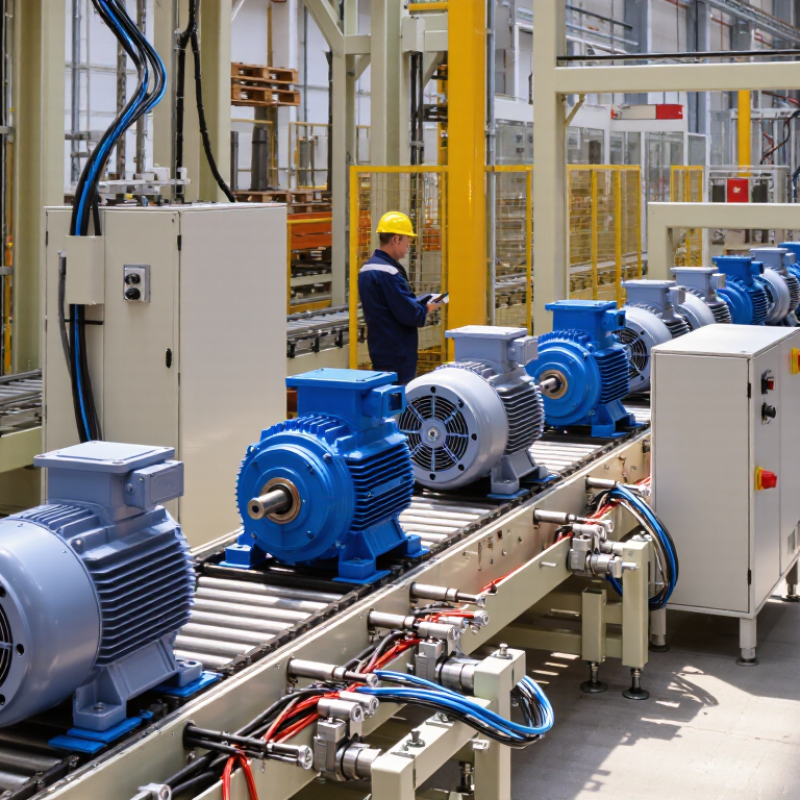
Top Industrial Gear Motor Manufacturers Worldwide?

Define Industrial Gear Motors Through IEC 60034-30-1 Efficiency Classes

Top Industrial Gear Motor Manufacturers Worldwide?

IEC 60034-30-1 gives buyers a consistent way to compare motor efficiency. It defines IE efficiency classes for line-operated AC motors under specified test conditions. Common classes include IE1, IE2, IE3, and IE4. Higher IE ratings generally indicate lower electrical losses at rated operating points.

However, a gear motor is not only an electric motor. Its gearbox adds tooth friction, seal drag, and oil losses. Therefore, an IE4 motor does not automatically create an IE4 gear motor system. Serious manufacturers should provide separate motor data and complete geared-unit performance information. Check rated speed, output torque, service factor, thermal limits, and test conditions.

Details matter. A conveyor running continuously at 1,450 revolutions per minute may benefit from a high-efficiency motor. Yet frequent starts, low-load operation, or poor lubrication can reduce real savings. Measure input power at the actual duty point when possible. Datasheets are useful, but field measurements are better.

Look beyond the badge.

When comparing industrial gear motor manufacturers worldwide, request IEC-based test reports, tolerances, duty ratings, and maintenance guidance. Ask whether efficiency figures describe the motor alone or the complete assembly. This distinction is often missed. I would also question unusually precise claims without test boundaries, because laboratory performance may not represent a dusty factory floor. Even experienced engineers can overvalue the IE number and undervalue alignment, temperature, and operating patterns.

Compare SEW-EURODRIVE, Siemens, NORD, Bonfiglioli, and Sumitomo

Choosing among five leading industrial gear motor manufacturers requires more than comparing catalog prices. Their strengths differ across torque density, service networks, noise control, and customization. A plant engineer should check rated torque, duty cycle, thermal capacity, backlash, and enclosure protection before selecting a supplier.

The International Energy Agency estimates that electric motor systems consume about half of global electricity. Small efficiency losses therefore become significant across conveyors, mixers, pumps, and packaging lines. IEC 60034-30-1 efficiency classes provide a useful motor benchmark, but the complete gear motor also depends on gearbox losses, lubrication, alignment, and inverter settings. The U.S. Department of Energy recommends evaluating motor-driven systems as a whole, rather than judging motors alone.

Fit matters. A 2024 MarketsandMarkets analysis forecasts steady growth in the industrial gearbox market, driven by automation, material handling, and energy-saving upgrades. In practical audits, maintenance access often matters as much as peak efficiency. A compact unit may save floor space but complicate seal replacement. A larger service network can reduce downtime, though local response times still need verification. Catalog efficiency data can also be optimistic under ideal loads. Numbers can mislead. Procurement teams should request test conditions, lifecycle cost models, spare-parts lead times, and documented performance from comparable installations.

Top Industrial Gear Motor Manufacturers Worldwide? - Compare SEW-EURODRIVE, Siemens, NORD, Bonfiglioli, and Sumitomo

Comparison Dimension Common Industrial Standard or Range Why It Matters Recommended Evaluation Method
Motor Power Approximately 0.12 kW to more than 200 kW for standard industrial gear-motor applications Determines the available mechanical output and suitable load capacity Match rated power with calculated load, acceleration, duty cycle, and starting conditions
Output Torque Varies from a few newton-metres to several hundred thousand newton-metres, depending on gearbox size Torque is the primary factor for moving conveyors, mixers, hoists, and other driven equipment Check continuous torque, peak torque, service factor, and permitted overhung loads
Gearbox Configurations Helical, helical-bevel, parallel-shaft, worm, planetary, and coaxial designs Different designs provide different combinations of efficiency, compactness, torque density, and cost Select the configuration according to installation space, load direction, efficiency target, and duty requirements
Typical Gear Ratios Common industrial ratios range from approximately 3:1 to above 1,000:1, depending on the gearbox arrangement The ratio determines output speed and influences available output torque Calculate required output speed first, then verify torque at the selected ratio
Efficiency Helical and bevel gearboxes commonly achieve higher efficiency than worm gearboxes; actual results depend on ratio, lubrication, and load Higher efficiency reduces energy consumption, heat generation, and operating cost Request efficiency data at the actual operating speed, ratio, and load rather than using a generic catalogue value
Motor Efficiency Class IEC efficiency classes include IE1, IE2, IE3, IE4, and IE5; availability depends on motor power and market regulations Higher efficiency classes can reduce lifetime electricity costs Compare rated efficiency, annual running hours, electricity price, and variable-speed operation
Protection Rating IP55 is widely used for general industrial motors; higher ratings such as IP65 and IP66 are selected for dust or water exposure The enclosure rating affects resistance to dust, moisture, and cleaning processes Choose the rating based on the actual environment, washdown method, humidity, and contamination level
Mounting Options Foot-mounted, flange-mounted, shaft-mounted, and torque-arm arrangements are common The mounting format determines mechanical compatibility and installation effort Verify shaft diameter, flange dimensions, keyway, mounting position, and allowable loads
Variable-Frequency Drive Compatibility Industrial gear motors are commonly paired with VFDs for adjustable speed and controlled acceleration VFD operation can improve process control but may increase thermal and electrical stresses Check inverter-duty insulation, minimum operating speed, cooling requirements, braking, and bearing protection
Operating Duty Continuous duty, intermittent duty, reversing duty, and high-starting-frequency applications require different sizing approaches Incorrect duty classification can cause overheating, premature wear, or insufficient starting performance Use the application load profile, starts per hour, acceleration time, and daily operating hours
Lubrication and Maintenance Many sealed gearboxes use long-life synthetic or mineral lubricants; service intervals depend on temperature, speed, and load Proper lubrication strongly affects gear life, bearing life, noise, and thermal performance Review lubricant type, fill quantity, inspection points, oil-change intervals, and spare-parts availability
Compliance and Documentation Common references include IEC motor standards, ISO quality systems, CE requirements where applicable, and regional electrical regulations Documentation supports safe installation, regulatory compliance, and consistent maintenance Request datasheets, dimensional drawings, efficiency data, certificates, manuals, and conformity documentation

Assess Torque, Gear Ratios, Speeds, and IE3–IE4 Motor Ratings

Choosing among top industrial gear motor manufacturers worldwide requires more than comparing catalog prices. Torque, gear ratio, output speed, and motor efficiency must match the actual machine load. A conveyor starting under full load needs higher starting torque than a lightly loaded mixer. Check continuous torque, peak torque, duty cycle, and the service factor. Undersizing may cause overheating, while excessive capacity can increase cost and energy loss.

Gear ratios determine how motor speed becomes useful shaft motion. A high ratio delivers stronger output torque but usually reduces speed and may increase gearbox losses. Confirm the required output revolutions per minute under real operating conditions, not only the no-load figure. Helical, bevel, and worm arrangements also affect efficiency, noise, maintenance access, and installation space. Small details matter here, including shaft alignment and the mounting position.

IE3 and IE4 ratings indicate improved motor efficiency, but the rating alone does not guarantee lower plant energy use. Actual savings depend on load profile, operating hours, inverter settings, and gearbox efficiency. IE4 can be valuable for continuous-duty equipment, although its purchase price and control requirements deserve careful review. A practical evaluation should compare measured current, temperature rise, vibration, and noise after installation. Do not trust assumptions. Recheck the calculation when loads change, because a clean spreadsheet can still describe the wrong machine.

Verify Reliability Using ISO 9001, IP55–IP66, and Duty-Cycle Data

Choosing top industrial gear motor manufacturers requires more than comparing torque charts.

ISO 9001 certification shows a controlled quality system, not automatic product excellence. The ISO Survey 2022 reported more than 1.2 million ISO 9001 certificates worldwide. That scale makes certification useful, but not decisive.

Ask for certificate scope, audit dates, corrective-action records, and traceable test reports. A vague certificate is a warning.

IP ratings need equal scrutiny.

Under IEC 60529, IP55 indicates limited dust ingress protection and resistance to water jets. IP66 requires dust-tight construction and protection against powerful water jets.

These ratings do not confirm bearing life, thermal endurance, or corrosion resistance. Check the test conditions.

A washdown line may need stainless hardware, sealed cable entries, and documented cleaning temperatures, even with IP66.

IP66 is not magic.

Demand duty-cycle evidence under IEC 60034-1.

S1 means continuous duty; intermittent loads may require S3, S4, or another rating. Include starts, stops, and rest periods.

The IEA’s Energy-Efficiency Policy Opportunities for Electric Motor-Driven Systems estimates motor-driven systems consume roughly 43–46% of global electricity. Poor sizing therefore wastes energy continuously.

Request temperature-rise data, overload limits, service factor, noise readings, and cycle graphs. One overlooked start per hour can change the thermal result.

Brochures help. Field verification still matters.

My judgment remains cautious when suppliers provide polished claims but no raw test data.

Rank Manufacturers by Applications, Lifecycle Cost, and Global Support

Top Industrial Gear Motor Manufacturers Worldwide?

Ranking industrial gear motor manufacturers requires more than comparing purchase prices. Application fit comes first: conveyors need steady torque, mixers demand overload tolerance, and hoists require dependable braking control. The European Commission’s Ecodesign study estimates motor systems consume about 46% of electricity in Europe, with industry responsible for roughly 69% of that demand. These figures make efficiency a practical cost issue, not a brochure feature. A suitable gearbox can reduce heat, vibration, and unplanned stoppages. Not always.

Lifecycle cost should include energy, lubrication, alignment, spare parts, technician time, and disposal. The U.S. Department of Energy reports that motor-driven equipment represents a substantial share of industrial electricity use, while its motor-system guidance emphasizes system optimization over component selection. Therefore, ranking should examine efficiency under real load, not only rated efficiency at full speed. A 15% purchase saving may disappear after repeated seal failures or difficult servicing. Field records matter more than polished claims.

Global support also deserves measurable criteria. Manufacturers should provide regional inventory, multilingual documentation, certified repair partners, and response targets for critical sites. The ISO 55001 asset-management framework supports this broader view by linking equipment decisions with risk, performance, and lifecycle value. Buyers can request failure-rate data, mean time to repair, and spare-part availability by region. Data can be incomplete. That is the uncomfortable part. Still, transparent evidence is more reliable than a universal ranking. The strongest manufacturers are those whose gear motors remain efficient, serviceable, and supported when dust, heat, and production pressure arrive together.

How to read this benchmark: Scores are normalized industry indicators from 0 to 100 based on the factors commonly used when selecting industrial gear motors: application suitability, expected lifecycle-cost advantage, and the importance of global service support. A higher lifecycle-cost score indicates lower total cost over the operating life. The benchmark is application-based and does not disclose manufacturer or brand data.

FAQS

What does an IE efficiency class measure?

It measures the electrical efficiency of a line-operated AC motor under defined test conditions. Higher classes usually mean lower losses. The gearbox is separate.

Does an IE4 motor make the complete gear motor highly efficient?

Not automatically. Gear teeth, seals, bearings, and oil create additional losses. Request performance data for the complete geared unit.

What operating details should buyers compare?

Check rated speed, output torque, service factor, temperature limits, and test conditions. Measure input power at the actual duty point when possible.

Why can field performance differ from datasheet results?

Frequent starts, low-load running, poor lubrication, and misalignment can reduce savings. A dusty factory is not a laboratory.

What does ISO 9001 certification prove?

It indicates a controlled quality system. It does not guarantee excellent products or long bearing life. Check certificate scope and audit dates.

What do IP55 and IP66 ratings indicate?

IP55 limits dust entry and resists water jets. IP66 provides dust-tight construction and stronger water-jet protection. IP66 is not magic.

How should duty cycles affect gear motor selection?

Continuous duty differs from intermittent duty. Include starts, stops, rest periods, overloads, and cycle duration. One missed start can change thermal results.

How should manufacturers be compared beyond purchase price?

Compare energy use, lubrication, alignment, spare parts, repair time, and regional support. A cheaper unit may cost more after repeated failures.

What evidence should buyers request from manufacturers?

Request test reports, tolerances, temperature-rise data, noise readings, failure records, repair times, and spare-part availability. Polished brochures are not enough.

Is there one universally best gear motor manufacturer?

No universal ranking is fully reliable. Application fit matters more than reputation alone. I would remain cautious without raw, traceable data.

Conclusion

An Industrial Gear Motor combines an electric motor with a gearbox to deliver controlled torque, speed, and mechanical power for demanding industrial equipment. This article explains how IEC 60034-30-1 efficiency classes, particularly IE3 and IE4, help evaluate energy performance and operating cost. It also examines key selection factors, including torque capacity, gear ratios, output speed, thermal behavior, mounting flexibility, and suitability for different duty cycles.

Reliability should be assessed through documented quality systems such as ISO 9001, suitable protection ratings from IP55 to IP66, service history, maintenance requirements, and verified duty-cycle performance. The comparison framework ranks manufacturers by application suitability, lifecycle cost, product efficiency, customization, spare-parts availability, technical support, and global service coverage. By balancing initial investment with energy consumption, durability, downtime risk, and long-term support, buyers can select an Industrial Gear Motor solution that provides dependable performance and measurable value across manufacturing, material handling, processing, and other industrial applications.

Aria

Aria

Aria is a dedicated marketing professional with a deep passion for innovative strategies and a keen understanding of our company's product offerings. With a wealth of experience in the industry, Aria excels at crafting engaging content that highlights the unique features and benefits of our......