7 Tips for Choosing the Right Sealed Gear Motor

Time:2026-11-12 Author:Charlotte
0%

A Sealed Gear Motor may look like a compact, ready-to-install component, but its performance depends on more than rated power. A motor mounted beside a washdown line faces different risks from one operating inside a dry packaging machine. Moisture, dust, temperature, shock, and frequent starts can all affect reliability. Small details matter.

The International Energy Agency’s report, Energy-Efficiency Policy Opportunities for Electric Motor-Driven Systems, estimates that motor-driven systems use about 45% of global electricity. The U.S. Department of Energy has also reported that motor systems account for a large share of industrial electricity use. These figures describe motor systems broadly, not sealed gear motors specifically. Still, they show why efficiency, correct sizing, and operating conditions deserve careful attention.

Choosing the right unit starts with the real job: required output torque, speed, duty cycle, mounting position, and exposure to contaminants. A high ingress-protection rating can help limit dust or water entry, but it does not guarantee suitability for every cleaning method or environment. Check the manufacturer’s test conditions and product documentation. A rating alone can mislead.

This guide presents seven practical checks for comparing sealed gear motors, from enclosure protection to serviceability. It is not a substitute for an application review. That part is easy to overlook. A few minutes spent confirming load and environment can prevent a motor that runs hot, wears early, or simply does not fit the machine.
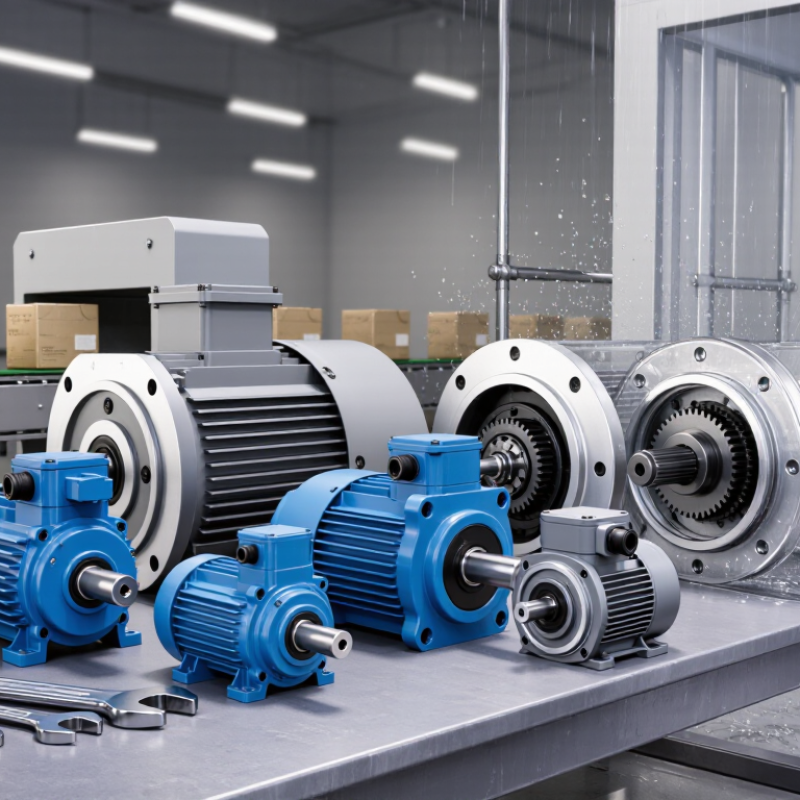
7 Tips for Choosing the Right Sealed Gear Motor

What a Sealed Gear Motor Is and How Its Components Work

7 Tips for Choosing the Right Sealed Gear Motor

A sealed gear motor combines an electric motor, a reduction gearbox, bearings, and protective seals. The motor creates rotation; gears trade speed for torque. A typical assembly may include a steel output shaft, a lubricated gearset, and a housing with a gasketed joint. When the shaft turns, the gears transfer motion while seals help keep dust, splashes, and lubricant where they belong. Small details matter. A nick on a shaft or a pinched gasket can create a leak path.

“Sealed” does not mean indestructible or suitable for every washdown. Check the stated ingress rating and test conditions, not just the product description. A common selection mistake is focusing on the enclosure while overlooking the cable entry, mounting face, or output-shaft seal. Heat also matters: a motor near a warm machine frame may run hotter than expected. The rating label helps, but real operating conditions deserve a second look.

Tips:

  • Match output torque to the load;
  • confirm required speed;
  • check the ingress rating;
  • verify seal compatibility with moisture or cleaners;
  • compare the operating-temperature range;
  • inspect mounting and shaft dimensions;
  • and confirm cable-entry protection.

Leave a margin for startup loads. It may seem cautious, but a conveyor that starts under load can demand more torque than its steady running figures suggest. Even good specifications need context.

How Operating Conditions Determine Motor and Gearbox Requirements

A sealed gear motor should be selected for the conditions it will actually face, not just its rated power. Start with the load: note the required speed, running torque, and extra force needed to start or stop the machine. A conveyor carrying wet produce may have a steady load, while a gate can demand a brief torque spike. Those peaks matter. Choosing from average load alone can leave too little margin.

Next, examine exposure and duty cycle. Water spray, cleaning chemicals, dust, heat, and cold can affect seals and lubrication differently. “Sealed” does not mean suitable for every washdown or chemical environment; check the stated protection level and material compatibility. Also record how often the motor starts, how long it runs, and whether it must reverse. Frequent cycling can raise motor temperature, even when each run is short. Small details matter.

Gear ratio and mounting deserve the same attention as enclosure protection. A higher reduction ratio can provide more output torque and lower speed, but it may not suit a fast-moving application. Check shaft direction, mounting position, available space, and how the load is supported. In practice, measurements are sometimes incomplete; I have seen teams estimate cycle time but forget the load at startup. Recheck assumptions under the toughest normal operating conditions, then confirm the motor’s thermal and torque limits with the supplier’s technical data.

How to Match Torque, Speed, and Gear Ratio to the Application

Choosing a sealed gear motor starts with the load, not the catalog’s largest torque figure. Start with the load. Estimate the force needed to move it, then account for friction, startup resistance, and any incline. For a rotating mechanism, use the required output torque and speed at the shaft. Measure, don’t guess. A conveyor may run smoothly once moving but need much more torque to start with a full belt.

Gear ratio links motor speed to output speed: a higher ratio usually lowers output speed and raises available torque. In practice, usable torque is lower than the simple motor-torque-times-ratio calculation because gears lose energy. Check the manufacturer’s efficiency data, and compare the result with both continuous and peak load demands. Leave a sensible margin, but avoid oversizing blindly; excess torque can strain couplings or make motion harder to control. I have seen a rough load estimate look convincing until startup conditions were tested.

Check duty cycle and heat, too. A sealed housing helps limit exposure to dust or moisture, but it can also reduce heat escape. Confirm the motor’s rated speed, allowable operating temperature, and enclosure rating for the real environment. If the application starts and stops often, test it under that pattern. A short bench test may miss heat buildup over a full shift. Keep the assumptions written down; some will be wrong, and that is useful to discover early.

How to Compare Sealing Ratings, Materials, and Environmental Protection

A sealed gear motor should match the actual exposure, not just carry an impressive IP code. IEC 60529 defines IP67 as dust-tight protection plus immersion at one metre for 30 minutes. That is a specific test, not proof of survival in every washdown or outdoor installation. IP68 conditions are agreed for the product, so check the stated depth and duration. Read the fine print.

Compare the enclosure material with the site’s chemicals, salt, and cleaning routine. Stainless steel resists corrosion well, but seams and fasteners can still become weak points. Aluminum is lighter; its coating may be damaged by scratches. For seals, confirm compatibility with the lubricant and cleaning agents. EPDM and FKM behave differently, and neither is ideal for every fluid or temperature. Ask for material details, not just “chemical resistant.”

NEMA 250 provides another enclosure classification system, but its ratings do not map directly onto IEC IP codes. Do not treat them as interchangeable. In practice, inspect cable entries, shaft seals, and mounting faces; water often finds the small gaps first. A motor tested only as a bare enclosure may not represent the assembled unit. Test it in the real orientation. That can be inconvenient, and easy to overlook. The rating is useful, but installation details still matter.

How to Verify Installation, Maintenance, and Supplier Quality

7 Tips for Choosing the Right Sealed Gear Motor
How to Verify Installation, Maintenance, and Supplier Quality

Installation checks should match the motor’s manual and your actual operating conditions. Confirm mounting position, shaft alignment, fastener torque, and cable-gland fit before startup. A seal is not a cure for poor installation. Check the specified ingress-protection rating against the real exposure: washdown, dust, and occasional splashes are different conditions. The U.S. Department of Energy’s 2014 motor-system sourcebook reports that motor-driven systems use about 69% of U.S. industrial electricity. That makes efficient setup and routine checks worth attention. Record baseline current, temperature, and vibration after commissioning.

During operation, inspect for lubricant leaks, unusual noise, rising surface temperature, and loosened mounts. Keep a simple log; readings become useful when compared over time. The International Energy Agency’s 2011 report on motor-driven systems estimates they consume roughly 46% of global electricity, underscoring the value of sound selection and upkeep. For supplier quality, request traceable test records, rated torque and speed curves, material specifications, and evidence that ingress protection was tested to the stated method. Check how warranty claims and replacement parts are handled, too. Paperwork helps, but it cannot replace a sample inspection. I would still verify the unit under the intended load; that step is easy to skip when schedules get tight.

7 Tips for Choosing the Right Sealed Gear Motor - How to Verify Installation, Maintenance, and Supplier Quality
Tip Selection Step What to Check Practical Verification Useful Records or Acceptance Evidence
1 Define the operating duty Required output speed and torque, operating hours, starts and stops, load variation, and ambient temperature. Compare the application’s operating profile with the motor and gearbox ratings. Include peak or starting loads, not just normal running conditions. Application requirements, motor and gearbox rating data, and documented duty-cycle assumptions.
2 Choose a suitable enclosure rating Exposure to dust, water, cleaning spray, humidity, and other contaminants. Check the declared IP rating against the actual environment. IP ratings describe protection under specified test conditions; they do not automatically establish suitability for every chemical, washdown process, or immersion condition. Manufacturer’s enclosure rating and test documentation, plus written confirmation of any application-specific limitations.
3 Confirm electrical compatibility Supply voltage, frequency, phase, control method, rated current, and starting requirements. Match the motor nameplate and wiring diagram to the available power supply and controller. Confirm that the selected drive or starter is compatible with the motor type. Nameplate details, wiring diagram, electrical specifications, and controller compatibility information.
4 Verify installation conditions Mounting position, shaft alignment, coupling or sprocket loads, fasteners, cable entry, and available cooling. Follow the installation instructions. Check alignment and secure mounting, avoid applying unapproved side loads to the output shaft, and ensure cable glands and seals are correctly fitted. Installation checklist, alignment measurements where applicable, and confirmation that the mounting arrangement matches the approved configuration.
5 Plan maintenance realistically Lubrication approach, seal inspection, operating temperature, noise, vibration, and cleaning requirements. Use the manufacturer’s maintenance schedule. Confirm whether the gearbox is factory-lubricated for life or requires periodic service; do not assume that a sealed housing needs no inspection. Maintenance instructions, lubrication specification if applicable, inspection schedule, and service history.
6 Check supplier quality controls Product traceability, inspection procedures, change control, and handling of nonconforming units. Ask how components and finished products are identified and inspected. Review relevant quality-system documentation and request evidence that applies to the specific product supplied. Quality-system documentation, serial or batch identification, inspection records, and documented corrective-action procedures.
7 Review testing and support Factory test coverage, documentation, warranty terms, spare parts, and technical support. Clarify which tests are performed on each unit or production batch. Agree on the documents supplied, the warranty scope, and the process for reporting a fault. Applicable test reports, product documentation, written warranty terms, and a clear support or replacement process.

FAQS

How should I choose the motor’s torque and speed?

Start with the real load, required shaft speed, friction, startup resistance, and any incline. Measure these values where possible. A full conveyor belt may need extra starting torque.

How does gear ratio affect output?

A higher ratio usually lowers output speed and increases available torque. Gear losses reduce usable torque, so check efficiency data against continuous and peak demands.

Should I choose more torque than the application requires?

Leave a sensible margin, but avoid oversizing blindly. Excess torque can strain couplings or make movement harder to control. My estimate may be wrong.

What should I check for heat and frequent starts?

Check rated speed, allowable temperature, and duty cycle. Sealed housings may limit heat escape. Test repeated starts and stops over a realistic operating period.

What does an IP67 rating tell me?

It indicates dust-tight protection and a defined immersion test: one metre for 30 minutes. It does not guarantee performance in every washdown or outdoor condition.

How do I compare enclosure materials and seals?

Match materials to site chemicals, salt, cleaning agents, and temperature. Check seal compatibility with lubricants. Stainless steel can resist corrosion, but seams and fasteners still need attention.

What installation details can weaken protection?

Check shaft alignment, mounting position, fastener torque, cable glands, and shaft seals. Water can enter through small gaps. Test the assembled motor in its intended orientation.

What should I inspect during operation and ask suppliers to provide?

Watch for leaks, unusual noise, rising temperature, and loose mounts. Record current, temperature, and vibration. Request test records, torque and speed curves, material details, and clear warranty terms. Paperwork helps, but inspect a sample too.

Conclusion

Choosing the right Sealed Gear Motor starts with understanding how the motor, gearbox, and protective enclosure work together to deliver controlled motion while limiting exposure to dust, moisture, and other environmental conditions. Begin by assessing the application’s operating environment, duty cycle, load, and available space. These factors help determine the motor’s power, the gearbox’s capacity, and the level of protection required.

Next, match torque, speed, and gear ratio to the equipment’s actual needs, allowing for start-up loads and variations during operation. Compare sealing ratings and construction materials against expected exposure, and check that the unit can be installed and maintained safely and conveniently. Before making a selection, verify mounting compatibility, access for routine inspection, and the supplier’s quality and technical support. A careful review of these points can help ensure dependable performance and a suitable service life.

Charlotte

Charlotte

Charlotte is a seasoned marketing professional with a deep understanding of the company's portfolio and a passion for elevating its presence in the market. With a keen eye for detail and a commitment to excellence, she ensures that our professional blog is regularly updated with insightful articles......