Selecting the 2026 Best Heavy Duty Gear Motor requires more than comparing rated power and purchase price. Global buyers face varied loads, duty cycles, climates, voltage systems, and service expectations. A motor that performs smoothly on a factory conveyor may struggle in a dusty quarry or refrigerated warehouse. Real selection begins with the driven machine, not the catalog cover. Torque at startup matters. So does heat.
This guide evaluates gear motors through practical engineering criteria, including continuous torque, shock-load capacity, gear ratio, thermal performance, sealing, brake options, and maintenance access. It also considers documentation, traceable test data, warranty terms, and regional conformity requirements. Experienced maintenance teams often inspect oil leakage, bearing noise, and abnormal vibration before failure becomes expensive. Those details rarely appear in glossy product tables. They matter greatly.
No universal winner exists. That is an uncomfortable but useful conclusion. A compact helical unit may suit packaging equipment, while a bevel or planetary design may better handle high torque and limited space. Buyers should verify calculations with qualified engineers and request application-specific test evidence. Some recommendations may change after site measurements. That is not weakness; it is responsible engineering. The right Heavy Duty Gear Motor should deliver dependable motion, manageable lifecycle costs, and confidence across borders.
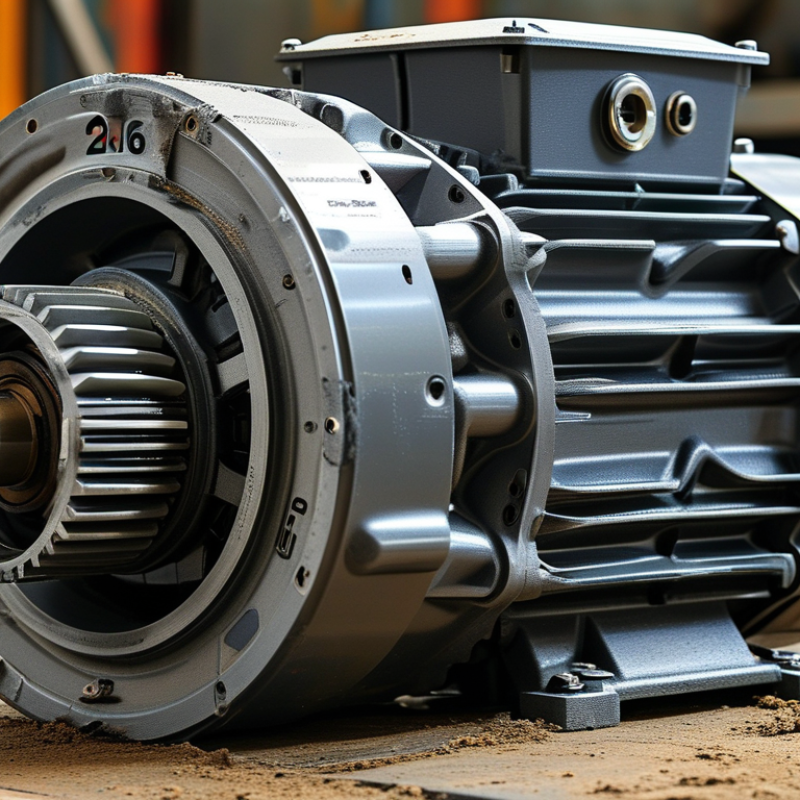
A heavy-duty gear motor in 2026 is defined by dependable performance, not a heavy housing alone. It must deliver stable torque through repeated starts, sudden loads, and long operating cycles. Buyers should examine rated output, service factor, thermal capacity, and allowable radial loads. These figures reveal more than marketing language.
In practical equipment reviews, heat remains a common failure signal. A motor that runs hot near its rated load may lose lubrication quality and shorten bearing life. Efficient helical or planetary gearing can reduce losses, but efficiency depends on load, alignment, and maintenance. Check the gearbox oil grade, sealing method, and replacement schedule. Small details matter.
Protection ratings also deserve careful attention. Dust, washdown water, vibration, and outdoor temperature can change the required enclosure. Ask for test reports, dimensional drawings, noise data, and duty-cycle limits. Independent documentation improves purchasing confidence across different markets. A reliable supplier should explain these limits clearly, not hide them behind broad claims.
One practical mistake is choosing maximum torque without checking starting frequency. That decision can create unnecessary cost and poor thermal performance. Real installations are rarely perfect. Misalignment, weak foundations, and delayed lubrication still cause failures. Therefore, select a gear motor with measurable margin, accessible service points, and support for local installation conditions.
2026 Best Heavy Duty Gear Motor for Global Buyers?
Matching a gear motor to an application starts with load behavior, not catalog torque. The International Energy Agency reports that electric motor systems consume about 50% of global electricity. Small efficiency losses become expensive across continuous production lines. For conveyors, mixers, and packaging equipment, helical gear motors usually provide efficient transmission and steady inline power. Bevel-helical units suit right-angle layouts where floor space is limited. Worm gear motors can offer compact reduction and useful holding behavior, but their heat and efficiency losses need careful checking.
Motion changes the selection. Planetary gear motors handle high torque density and frequent acceleration. Hoists and vertical axes need braking, backstop protection, and verified static loads. The International Federation of Robotics recorded 541,302 industrial robot installations in 2023. That growth increases demand for precise starts, low backlash, and repeatable duty cycles. Yet automation does not automatically justify the most expensive gearbox. A slow conveyor may need durability more than extreme positioning accuracy.
Check the real duty cycle. Measure starts per hour, peak torque, ambient temperature, washdown exposure, and shaft loading. Select thermal capacity, not only rated output torque. In practice, a motor that survives a ten-minute test may still fail during a twelve-hour shift. That is an uncomfortable detail. Service factors are helpful, but they can hide poor sizing. Verify lubrication, mounting position, insulation, and spare-part access before approval. The best match is sometimes less powerful, simpler, and easier to maintain.
2026 Best Heavy Duty Gear Motor for Global Buyers?
Key Performance Factors for Global Gear Motor Buyers
A heavy-duty gear motor should be selected from the duty cycle, not only the catalog torque. Continuous loads require stable thermal performance, while conveyors with frequent starts need higher starting torque and a suitable service factor. Check the gearbox rating at the real output speed. A large number can mislead.
The International Energy Agency reports that electric motor systems use nearly half of global electricity. This makes efficiency a purchasing issue, not a minor specification. IEC 60034-30-1 defines efficiency classes for many motor types, including IE3 and IE4. Buyers should request measured efficiency, power-factor data, and temperature-rise results. The U.S. Department of Energy’s Industrial Motor Systems Market Assessment also found major savings potential through better motor-system sizing and controls. The report is older, but its warning remains practical.
Ingress protection matters in dusty plants and washdown areas. Specify the required IP rating, shaft sealing, lubricant type, ambient temperature, and mounting position. A 40°C warehouse is not the same as a hot steel-processing line. Global buyers should also verify voltage, frequency, insulation class, certificates, spare-part availability, and local service capability. These details reduce costly delays at customs and installation sites. My own purchasing experience suggests that documentation is often treated as paperwork. It should be treated as performance evidence. Even so, efficiency claims may vary with testing conditions, so independent test records deserve more weight than attractive brochures.
2026 Best Heavy Duty Gear Motor for Global Buyers?
When I evaluate a heavy duty gear motor, I begin with the application, not the catalog rating. Load cycles, starting torque, shock loads, and ambient temperature often expose weak designs. A motor that survives a clean factory may struggle beside dust, washdown spray, or unstable voltage. Heat matters. Confirm the service factor, insulation class, brake response, and overload protection under real operating conditions.
Efficiency requires more than a high motor efficiency number. Check the complete motor-and-gearbox system, including transmission losses, lubrication, and standby consumption. IEC 60034-30-1 can guide motor efficiency classification, while IEC 60034-1 supports key motor performance requirements. Test under load. A smaller, correctly sized unit may use less energy than an oversized motor running far below capacity.
Safety and compliance need documented evidence. Review conformity records, risk assessments, wiring diagrams, EMC test results, and protection ratings under IEC 60529. Machinery integration may also involve IEC 60204-1 and ISO 13849-1, depending on the control system and destination market. Requirements differ between regions, so local verification remains essential. I once trusted a familiar enclosure rating and overlooked cable glands; moisture entered through the installation. That mistake changed my checklist. Ask for traceable test reports, clear maintenance instructions, and replacement-part data. Not just the label.
A reliable supplier starts with engineering evidence, not attractive catalog photos. The IEA’s Energy Efficiency 2017 report estimates that electric motor systems consume about 53% of global electricity. Efficiency, therefore, affects both operating cost and carbon performance. Ask for rated torque, service factor, gear ratio, thermal limits, and duty-cycle calculations. A serious supplier should provide test records for vibration, noise, temperature rise, sealing, and load performance. Check compliance with applicable IEC motor standards and confirm the declared IP rating. One missing document can become an expensive problem.
Tips: Request a sample test report before placing a large order. Compare continuous torque, not only starting torque. Ask how replacement parts are stored and shipped. Clarify warranty exclusions in writing.
Supplier reliability also depends on production discipline. Review quality certificates, traceability procedures, inspection stages, and corrective-action records. The U.S. Department of Energy reports that motor systems use more than 2,300 billion kWh annually in American industry. Small efficiency losses can become large costs across pumps, conveyors, and crushers. Check whether the supplier tests assembled gear motors under realistic loads. Some suppliers quote impressive efficiency figures under ideal conditions. Real plants are rarely ideal. That is worth questioning. Confirm lead times, factory capacity, export packaging, and technical support across time zones before approval.
Start with load behavior, not catalog torque. Record starting torque, peak torque, shock loads, speed, and shaft loading. A ten-minute test proves little. Twelve-hour shifts reveal more.
Helical units suit efficient inline power and steady conveyor movement. Bevel-helical units help when the drive needs a right-angle layout. Choose durability over extreme precision when positioning is unimportant.
Worm units can provide compact reduction and useful holding behavior. Check heat, transmission efficiency, lubrication, and duty cycle carefully. Compact does not mean cool.
Planetary units suit high torque density, frequent acceleration, and repeatable motion. They may help robotic axes or demanding automation. They are not automatically best for slow conveyors.
Check braking, backstop protection, verified static loads, and overload response. Confirm brake timing during power loss. Gravity is unforgiving.
Measure starts per hour, ambient temperature, operating duration, and actual load. Review thermal limits, insulation, lubrication, and mounting position. Rated torque alone can mislead. Recheck the selection after a full-shift trial.
Request torque, ratios, service factors, thermal calculations, load tests, vibration results, noise data, temperature-rise records, sealing evidence, and traceable compliance documents. Ask for wiring diagrams and maintenance instructions. One missing document can become expensive.
Check production traceability, inspection stages, corrective-action records, spare-part access, lead times, packaging, and technical support. Confirm the enclosure rating and cable-gland details. I might trust a label too quickly. Moisture often enters through installation details.
In 2026, a Heavy Duty Gear Motor is defined by its ability to deliver stable torque, reliable power transmission, and long service life under demanding industrial conditions. Selecting the right type requires matching motor design, gear ratio, output speed, mounting configuration, and load capacity with the application, whether it involves conveyors, lifting equipment, mixers, automated machinery, or material-handling systems. Buyers should also evaluate thermal performance, shock-load resistance, noise levels, energy efficiency, maintenance requirements, and control compatibility.
Safety and compliance are equally important for global purchasing decisions. A suitable gear motor should support dependable braking, proper overload protection, effective sealing, and operation in the intended environmental conditions. Buyers should confirm that the product meets relevant electrical, mechanical, and workplace safety requirements in the target market. Finally, a reliable supplier should provide consistent quality control, clear technical documentation, responsive engineering support, stable production capacity, transparent lead times, and dependable after-sales service. These factors help global buyers reduce operational risk and achieve long-term value.
